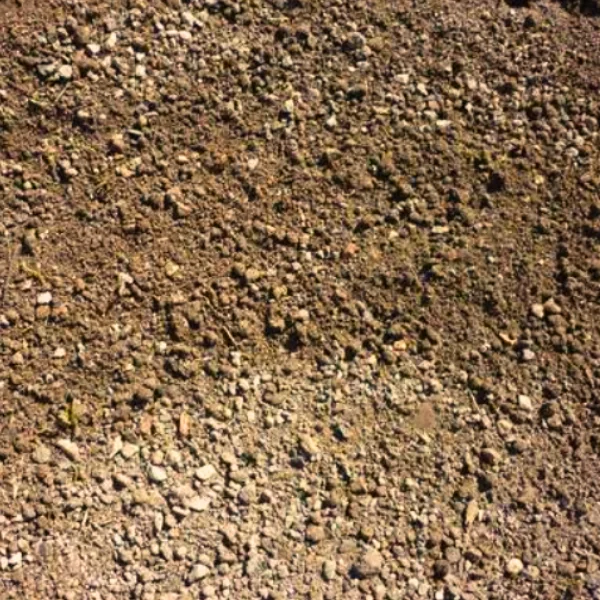
Recycled Topsoil
Recycled topsoil is a processed soil material produced from recovered natural soils that are screened and conditioned for reuse in landscaping, construction, and ground restoration works.
Description
Recycled topsoil is created from excavated natural soils that are recovered, screened, and blended to produce a consistent growing medium. It is supplied as a loose fill soil suitable for general external works. The material is classified as a recycled landscaping soil product.
It is screened, typically to 10-20 mm, to remove larger stones and debris, leaving a workable soil with a slightly coarse texture and dark brown colour. Enriched with organic matter, it provides essential nutrients, improves soil structure, and retains moisture for healthy root growth. The resulting soil provides workable structure, moderate drainage, and balanced fines content. Performance varies by source but remains suitable for non structural ground applications.
Typical uses include domestic garden preparation, commercial landscaping, turf underlay, and civil site reinstatement. It is widely used where sustainable material recovery is required without reliance on virgin soil extraction. Recycled Topsoil is suitable for levelling lawns, filling borders, laying turf, and creating raised beds. Please note: as a recycled product, it may contain small traces of foreign material.
Material Classification
Recycled topsoil falls within processed soil materials derived from reclaimed sources. It is not a quarried aggregate and does not carry a BS EN aggregate grading. Supply is based on industry accepted landscaping soil classifications.
Reclaimed origin reduces reliance on virgin soil.
Screened grading improves usability on site.
Supplied as loose bulk material.
Production and Processing
Recovered soils are collected from excavation and development sites. The material is screened to remove oversized particles and blended where required to improve texture. No chemical treatment is applied.
Mechanical screening removes stones and debris.
Blending improves consistency between loads.
Processing supports reuse of excavated soils.
Soil Texture and Structure
Recycled topsoil typically presents a loamy to sandy loam texture. Clay content varies depending on source material. The soil remains workable when moist and breaks down under light compaction.
Balanced fines support planting media.
Natural particles allow root penetration.
Variable texture reflects recycled origin.
Drainage and Moisture Behaviour
The soil allows moderate water movement through its structure. Drainage performance depends on fines content and compaction level. It is suitable for general landscaping but not for drainage layers.
Moderate permeability supports surface water movement.
Retained moisture aids plant establishment.
Excessive compaction reduces drainage rate.
Environmental and Sustainability Context
Use of recycled topsoil supports material recovery and landfill diversion. It aligns with circular economy principles within construction and landscaping sectors. Carbon impact is reduced compared to virgin soil sourcing.
Reuse of excavated soils reduces waste.
Lower transport impact than imported virgin soil.
Supports sustainable project requirements.
Suitability and Usage Limitations
Suitable For
General landscaping and garden preparation.
Turf underlay and lawn formation.
Site restoration and reinstatement works.
Raised beds with appropriate conditioning.
Non structural ground build ups.
Not Suitable For
Structural fill or load bearing layers.
Specialist horticultural or sports turf systems.
Drainage or soakaway construction.
Applications requiring certified nutrient profiles.
Areas with strict contamination specifications.
Application Suitability Reference
Application | Suitable | Reason |
|---|---|---|
Garden top layer | Yes | Provides workable planting medium |
Turf underlay | Yes | Supports grass root establishment |
Landscaping beds | Yes | Balanced soil structure |
Structural fill | No | Not load rated |
Drainage layers | No | Fines content restricts flow |
Site reinstatement | Yes | Matches natural ground conditions |
Comparison With Virgin and Manufactured Topsoil
Recycled topsoil differs from both virgin topsoil and manufactured topsoil in terms of origin, processing method, and intended use. While all three materials are used within landscaping and groundworks, they are specified for different project requirements.
Virgin topsoil is obtained by stripping undisturbed land and is typically screened to produce a consistent growing medium. Manufactured topsoil is an engineered blend created by combining mineral soils with composts or organic additives to achieve defined performance characteristics.
Recycled topsoil is produced from reclaimed excavation soils that are processed for reuse. It provides a sustainable alternative for general landscaping, reinstatement, and bulk ground preparation where certified nutrient performance or engineered grading is not required.
Virgin vs Recycled vs Manufactured Topsoil
Feature | Recycled Topsoil | Virgin Topsoil | Manufactured Topsoil |
|---|---|---|---|
Source | Reclaimed excavation soils | Newly stripped natural land | Engineered blend of soils and organics |
Sustainability | High – supports reuse and landfill diversion | Low – relies on new land stripping | Moderate – depends on inputs |
Processing Method | Screened and blended as required | Screened, sometimes lightly blended | Mechanically blended to specification |
Consistency | Variable by source | Generally consistent | Highly consistent |
Nutrient Profile | Variable, not guaranteed | Natural nutrient levels | Controlled and specified |
Typical Texture | Loam to sandy loam | Loam | Designed to requirement |
Drainage Behaviour | Moderate | Moderate | Engineered to suit application |
Structural Rating | Not rated | Not rated | Not rated |
Primary Uses | Landscaping, turf underlay, reinstatement | Gardens, lawns, planting | Sports turf, planting schemes |
Cost Profile | Cost-effective | Higher cost | Highest cost |
Environmental Impact | Reduced carbon and waste | Higher environmental impact | Variable |
Cost and Commercial Positioning
Recycled topsoil is commonly specified as a cost-effective alternative to virgin topsoil for large-scale landscaping, reinstatement, and ground preparation works. Its reclaimed origin reduces material costs associated with extraction and disposal, making it suitable for bulk supply projects.
Virgin and manufactured topsoils are typically selected where visual consistency, controlled performance, or planting specifications justify higher material costs.
TradeSupermarket - UK Supply and Hire Platform
TradeSupermarket is a UK-based platform supplying plant hire, aggregates, and building materials for a wide range of project types nationwide. Products and services are structured in line with recognised UK classifications and standard supply and hire practices.
What Sets TradeSupermarket Apart
Unified Platform Structure: Hire services, aggregates, and building materials are all managed through one unified system instead of separate suppliers.
Classification-Led Organisation: Products are shown using standard UK grades, categories, and typical use-cases to help buyers choose accurately.
Defined Supply Scope: The platform focuses on supplying materials and equipment in a clear, straightforward way, without adding design or installation services.
Use-Case Neutral Positioning: Products are suitable for home, commercial, and large-scale projects without assuming a specific type of customer.
Consistent Operational Standards: All product categories follow clear, uniform processes to ensure a steady and reliable experience every time.
Supply and Delivery Responsibility
Material Variation: Aggregates are natural or recycled materials and variation in colour, shape, and composition can occur between sources and deliveries.
Quantity and Coverage: Materials are supplied by weight or volume as ordered. Coverage, yield, and performance are influenced by application method and ground conditions.
Delivery and Site Access: Delivery requires suitable access for the selected vehicle type. Clear access, adequate space, and stable ground conditions must be available at the delivery location.
Offloading Conditions: Materials are offloaded at ground level only. Placement, spreading, or installation services are not included as part of supply.
Returns and Surplus Material: Bulk aggregates are non-returnable once delivered. Customers should ensure quantities are calculated accurately before placing an order.
Supply Scope: Supply is limited to the provision of materials only. Product selection, suitability assessment, and installation remain the responsibility of the buyer or appointed contractor.
Related Products
Browse all products to find more items in this category.