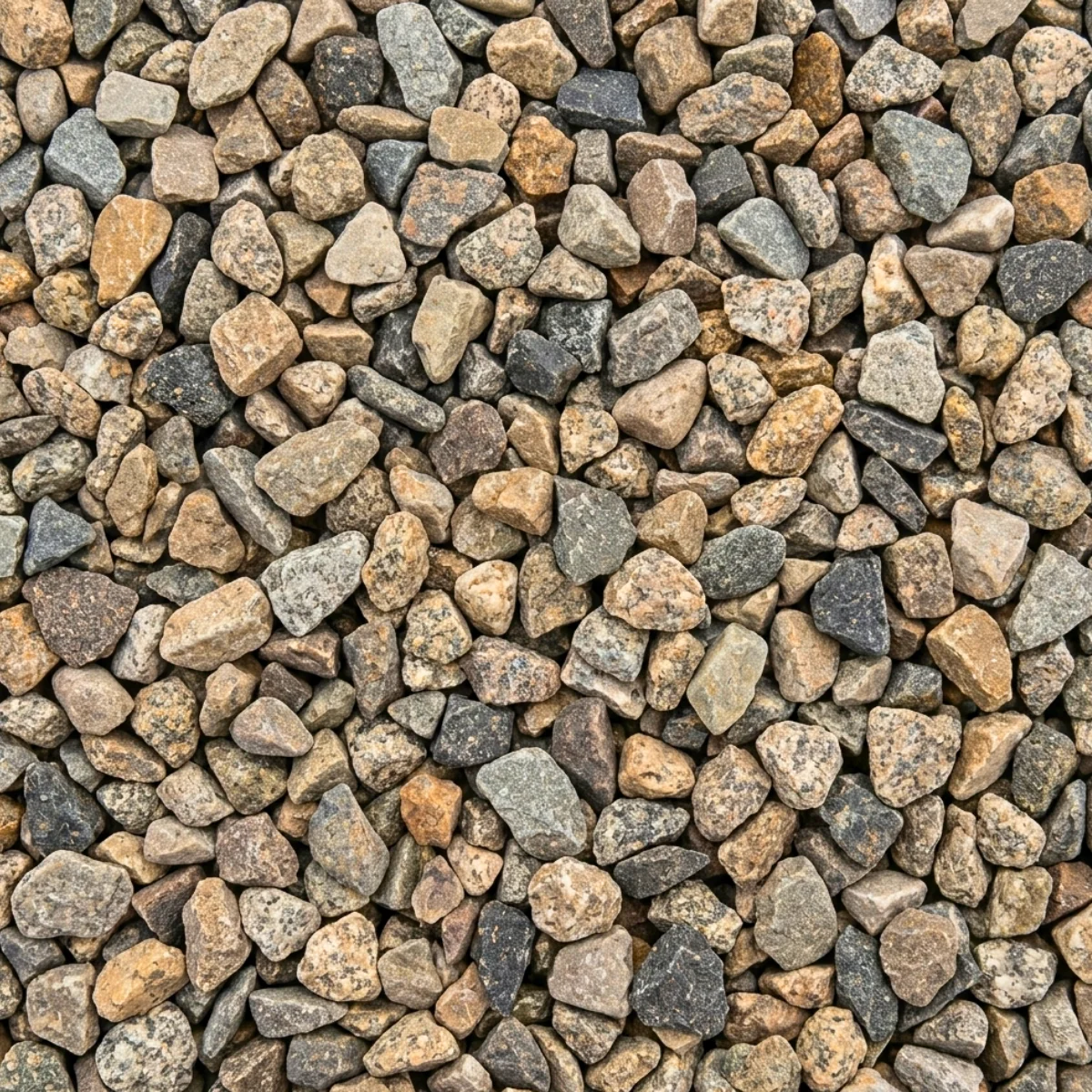
Recycled Pipe Bedding 10mm
Recycled Pipe Bedding 10mm is a graded recycled aggregate used to support and surround pipework, providing stable load distribution, consistent compaction, and controlled drainage around installed services.
Description
Recycled Pipe Bedding 10mm is produced from processed recycled concrete and masonry. It is screened to a nominal 10mm grading with controlled fines content suitable for pipe support layers.
The material compacts to form a stable, uniform bed. Particle shape allows interlock while still permitting limited water movement. This reduces point loading on pipes.
It is used across domestic drainage, commercial service runs, and civil infrastructure works. Typical applications include foul water, surface water, and duct installations.
Pipe Bedding Function and Material Context
Pipe bedding is the material placed beneath and around buried pipework. It provides uniform support, maintains line and level, and protects pipes from structural damage during service life.
Correct bedding prevents point loading caused by uneven ground or oversized particles. Even load distribution reduces cracking risk in rigid pipes and deformation in flexible systems.
Material selection depends on pipe type, ground conditions, and imposed loads such as traffic or structures. Bedding materials are chosen for particle size, compaction behaviour, and drainage performance.
Common bedding material characteristics
Sand: Sand provides uniform contact but limited structural restraint.
Rounded / Pea Gravel: Rounded gravels allow drainage but resist compaction.
Angular Aggregates: Angular aggregates improve stability and load transfer.
Flowable Fills (CLSM): Flowable fills provide full support but restrict future access.
Why 10mm graded aggregate is commonly used?
Particle size supports close pipe contact.
Angular faces reduce movement under load.
Controlled grading limits voids and settlement.
Suitable for both rigid and flexible pipe systems.
Grading and Material Classification
This aggregate is supplied as a recycled, mechanically crushed product. The grading focuses on small particle size to achieve close contact around pipes.
It supports compliance-led installation practices where recycled materials are permitted.
Nominal size supports even pipe bedding.
Recycled source reduces primary aggregate demand.
Controlled fines support compaction performance.
Compaction and Load Distribution
The 10mm grading compacts easily under light mechanical effort. It forms a consistent bearing layer beneath and around pipe barrels.
Uniform support reduces stress concentrations.
Close grading spreads imposed loads.
Angular particles resist lateral movement.
Compacted layer limits post-installation settlement.
Drainage and Water Interaction
Recycled Pipe Bedding 10mm allows controlled water movement. It does not retain excessive moisture when correctly compacted.
This supports long-term pipe stability.
Moderate permeability avoids water trapping.
Reduced fines limit clogging risk.
Supports drainage continuity around services.
Particle Shape and Stability
Crushed recycled particles provide angular faces. This improves interlock compared with rounded materials. Stable bedding is maintained during backfilling.
Angular faces improve load transfer.
Interlock limits displacement during installation.
Stable matrix supports pipe alignment.
Typical Installation Environment
This product is suited to trench installations. It performs consistently in confined excavation conditions. It is compatible with standard trench widths and depths.
Suitable for shallow and deep service runs.
Performs under trafficked and non-trafficked areas.
Compatible with layered backfill systems.
Choosing the Right Pipe Bedding Material
1. Recycled vs Quarried Pipe Bedding
Recycled pipe bedding is made from crushed concrete, brick and reclaimed gravel. It’s screened to a tight particle range (e.g., 4-10mm or single 10mm). It offers similar support and drainage properties to quarried aggregates and is increasingly specified where sustainability and cost-effectiveness are priorities.
Quarried pipe bedding (crushed stone/gravel) is virgin material from rock sources. It tends to be more consistent in grading and quality; it’s sometimes preferred when strict engineering tolerance is required or in environments with variable source material availability.
Key Differences:
Environmental impact: Recycled reduces quarry demand and landfill waste.
Cost: Recycled often lower cost.
Consistency: Quarried can be more uniform in grading.
2. Recycled 10mm Bedding vs Sand Bedding
Particle interlock: Recycled packs around pipes better than sand.
Drainage: Better controlled drainage in recycled, less water trapping.
Compaction: Recycled compacts more uniformly.
3. Recycled 10mm Bedding vs MOT Type 1
Primary function: MOT Type 1 is designed as a sub-base, not just bedding.
Size consistency: Recycled 10mm is more uniform for pipe contact.
Application: Use Type 1 for heavy structural layers, not final bedding contact.
4. Recycled 10mm Bedding vs Clean Stone
Clean stone drainage: Larger sizes (e.g., 20mm+) drain better but may not support small pipe contact as uniformly.
Recycled 10mm: Better for compact, even bedding around small diameter pipes
When To Choose 10mm Graded Bedding?
This helps clear up confusion on when 10mm is appropriate.
Smaller pipe diameters (e.g., 100–300mm) - tight aggregate contact improves load distribution.
Controlled water discharge trenches requiring moderate permeability.
Limits fines content to reduce settlement risk.
When SHW compliance or equivalent specifications are required for civil works.
Suitability and Usage Limitations
Suitable For
Foul water drainage pipes.
Surface water drainage systems.
Utility service ducts.
Domestic and commercial trenches.
General pipe surround material.
Not Suitable For
Exposed decorative surfaces.
High-spec filtration layers.
Free-draining soakaway construction.
Structural concrete replacement.
Areas requiring certified primary aggregate only.
Industry Standards & Compliance
Recycled Pipe Bedding is commonly supplied to meet Specification for Highway Works (SHW) Clause 503 for pipe bedding and surrounds when used on civil engineering projects.
SHW compliance ensures aggregate grading is appropriate for load distribution and drainage.
BS EN standards still apply for aggregate quality and testing procedures.
Application Suitability Reference
Application | Suitable | Reason |
|---|---|---|
Drainage pipe bedding | Yes | Even load distribution around pipes |
Pipe surround material | Yes | Controlled compaction and stability |
Utility duct installations | Yes | Consistent grading supports alignment |
Soakaways | No | Drainage performance not fully open |
Decorative landscaping | No | Recycled appearance not uniform |
Structural sub-base | No | Grading too fine for load layers |
Are recycled aggregates inferior to quarried aggregates?
No. Quality recycled pipe bedding is processed, screened, and graded to meet recognised engineering criteria. When correctly produced, its performance is comparable to quarried aggregates for bedding and surround use.
Does aggregate size matter for drainage and pipe bedding?
Yes. Aggregate size and grading directly affect drainage rate, compaction behaviour, and pipe support. Uniformly graded materials provide consistent load distribution and controlled water movement around pipes.
Can any crushed material be used as pipe bedding?
No. Only aggregates that meet recognised grading and performance standards should be used. Uncontrolled crushed material can cause uneven support, excessive settlement, or poor drainage.
Is recycled pipe bedding suitable for long-term installations?
Yes, when supplied to an appropriate grading and compacted correctly. Recycled pipe bedding is widely used in domestic, commercial, and civil drainage works with long service life expectations.
TradeSupermarket - UK Supply and Hire Platform
TradeSupermarket is a UK-based platform supplying plant hire, aggregates, and building materials for a wide range of project types nationwide. Products and services are structured in line with recognised UK classifications and standard supply and hire practices.
What Sets TradeSupermarket Apart
Unified Platform Structure: Hire services, aggregates, and building materials are supplied through a single operational framework rather than separate merchant systems.
Classification-Led Organisation: Products are presented using recognised UK grading, classification, and typical use categories to support correct selection.
Defined Supply Scope: The platform focuses on material supply and equipment hire only, with design, specification, and installation remaining outside the scope of service.
Use-Case Neutral Positioning: Products support domestic, commercial, and infrastructure projects without retail-led assumptions.
Consistent Operational Standards: The same structural and procedural standards are applied across all product categories.
Supply and Delivery Responsibility
Material Variation: Aggregates are natural or recycled materials and variation in colour, shape, and composition can occur between sources and deliveries.
Quantity and Coverage: Materials are supplied by weight or volume as ordered. Coverage, yield, and performance are influenced by application method and ground conditions.
Delivery and Site Access: Delivery requires suitable access for the selected vehicle type. Clear access, adequate space, and stable ground conditions must be available at the delivery location.
Offloading Conditions: Materials are offloaded at ground level only. Placement, spreading, or installation services are not included as part of supply.
Returns and Surplus Material: Bulk aggregates are non-returnable once delivered. Customers should ensure quantities are calculated accurately before placing an order.
Supply Scope: Supply is limited to the provision of materials only. Product selection, suitability assessment, and installation remain the responsibility of the buyer or appointed contractor.
Related Products
Browse all products to find more items in this category.