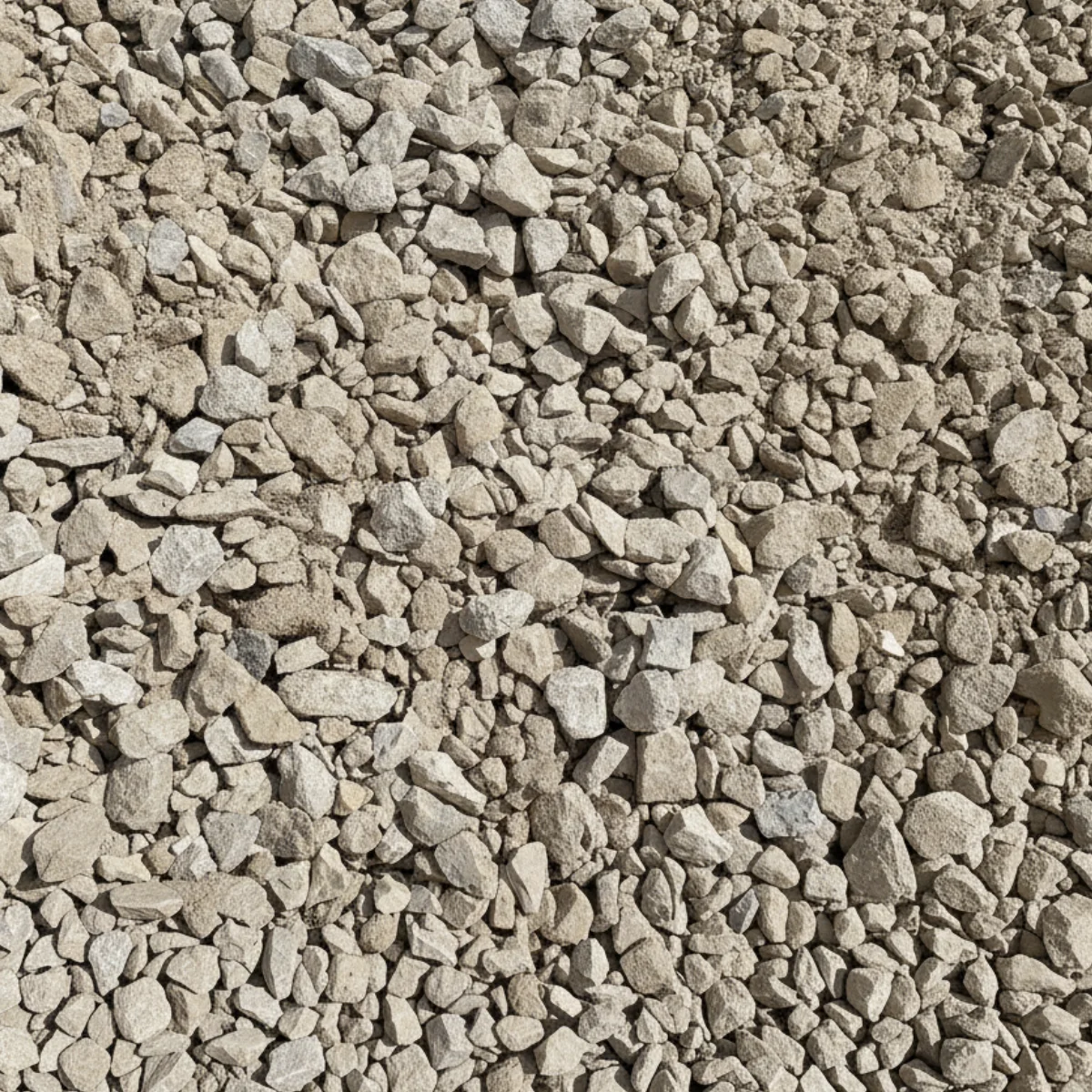
MOT Type 3 Sub Base
MOT Type 3 Sub Base is a 0-40mm reduced fines aggregate, fully compliant with SHW 805, designed for permeable sub-bases in SuDS, driveways, sports pitches and landscaping projects.
Description
MOT Type 3 Sub Base, is a permeable sub-base aggregate graded to allow water to pass freely through the material. It is typically used beneath permeable paving, porous surfaces, and drainage-critical construction layers to support controlled infiltration.
It is also commonly referred to as DOT Type 3 in drainage-led construction and highway specifications. The term “DOT” references Department of Transport–based specification naming and does not indicate a different material grading.
The material compacts to form a stable layer while maintaining open voids. This structure allows water to pass through without trapping fines and supports use across domestic driveways, commercial yards, and civil drainage schemes.
Material Composition and Grading
Type 3 MOT is produced from crushed rock or recycled stone processed to a controlled grading. The reduced fines content differentiates it from Type 1.
Reduced fines improve permeability.
Controlled grading supports compaction.
Crushed faces aid interlock.
Drainage and Water Interaction
This aggregate supports rapid vertical water movement. It prevents water retention beneath finished surfaces.
Open voids allow free drainage.
Low fines reduce clogging risk.
Suitable for SUDS designs.
Compaction and Load Behaviour
Type 3 MOT compacts under mechanical effort to form a stable base. It maintains drainage after compaction.
Angular particles lock under load.
Compacted layer spreads imposed loads.
Maintains permeability when installed correctly.
Standards and Classification
Type 3 MOT aligns with UK highway and construction specifications. It is commonly referenced under SHW Clause 805.
It may be produced in accordance with BS EN 13242 and PD 6682 requirements depending on source.
Typical Layer Construction
The material is laid in controlled thicknesses to achieve performance. Layer depth varies by load requirement.
Even spread supports uniform compaction.
Correct depth ensures load distribution.
Separation membranes may be required.
Consistency and Supply
Particle shape and colour may vary by quarry or recycling source. Performance is defined by grading, not appearance.
Natural variation is expected.
Grading controls behaviour.
Supplied loose in bulk.
Suitability and Usage Limitations
Suitable For
Permeable paving sub bases.
Driveways with drainage requirements.
Car parks and parking bays.
Footpaths and access routes.
SUDS compliant groundworks.
Not Suitable For
Fully bound concrete layers.
Areas requiring fines binding.
Decorative surface finishes.
Thin overlays without compaction.
Structural fill without engineering review.
Application Suitability Reference
Application | Suitable | Reason |
|---|---|---|
Permeable block paving | Yes | Maintains drainage beneath surface |
Resin bound surfaces | Yes | Supports water movement |
Standard road base | No | Lacks fines for binding |
Car park sub base | Yes | Distributes load with drainage |
Pathways | Yes | Stable and free draining |
Structural concrete base | No | Not designed as bound layer |
Type 3 MOT vs Type 1 MOT
Type 3 MOT and Type 1 MOT are both sub-base aggregates used in construction, but they are designed for different performance requirements. The primary distinction lies in fines content and drainage behaviour.
Type 1 MOT contains a higher proportion of fines, which allows the material to bind tightly when compacted. This creates a dense, load-bearing layer suitable for standard road construction and areas where drainage through the sub-base is not required.
Type 3 MOT is open graded with significantly fewer fines. This structure allows water to pass freely through the material while still providing structural support. As a result, Type 3 MOT is specified where permeability is required, such as beneath permeable paving, SuDS installations, and drainage-critical groundworks.
In practice, Type 1 MOT is selected for traditional bound or impermeable constructions, while Type 3 MOT is used where controlled water infiltration is a design requirement.
Type 3 MOT vs Type 1 MOT – Summary
Feature | Type 3 MOT | Type 1 MOT |
|---|---|---|
Fines Content | Low | High |
Drainage | Free draining | Limited |
Binding Behaviour | Open graded, non-binding | Binds tightly when compacted |
Typical Use | Permeable sub-bases, SuDS | Standard road and pavement bases |
Water Infiltration | Yes | No |
Common Applications | Permeable driveways, car parks | Roads, hardstandings |
Supply Formats and Common Use
Type 3 MOT is primarily supplied as a loose bulk aggregate for use on construction and landscaping projects. Bulk supply is typically delivered by tipper or grab vehicle and is suited to applications where larger volumes are required.
Bulk supply is commonly selected by groundworks contractors, civil engineering firms, landscaping contractors, and infrastructure project teams. These users typically require controlled grading, consistent performance, and efficient placement over larger areas.
Bagged Type 3 MOT may be used for small-scale projects, repairs, or locations with restricted access where bulk delivery is not practical. Both bulk and bagged formats provide the same material characteristics, with the choice of supply format determined by project scale, access constraints, and handling requirements rather than performance differences.
TradeSupermarket - UK Supply and Hire Platform
TradeSupermarket is a UK-based platform supplying plant hire, aggregates, and building materials for a wide range of project types nationwide. Products and services are structured in line with recognised UK classifications and standard supply and hire practices.
What Sets TradeSupermarket Apart
Unified Platform Structure: Hire services, aggregates, and building materials are all managed through one unified system instead of separate suppliers.
Classification-Led Organisation: Products are shown using standard UK grades, categories, and typical use-cases to help buyers choose accurately.
Defined Supply Scope: The platform focuses on supplying materials and equipment in a clear, straightforward way, without adding design or installation services.
Use-Case Neutral Positioning: Products are suitable for home, commercial, and large-scale projects without assuming a specific type of customer.
Consistent Operational Standards: All product categories follow clear, uniform processes to ensure a steady and reliable experience every time.
Supply and Delivery Responsibility
Material Variation: Aggregates are natural or recycled materials and variation in colour, shape, and composition can occur between sources and deliveries.
Quantity and Coverage: Materials are supplied by weight or volume as ordered. Coverage, yield, and performance are influenced by application method and ground conditions.
Delivery and Site Access: Delivery requires suitable access for the selected vehicle type. Clear access, adequate space, and stable ground conditions must be available at the delivery location.
Offloading Conditions: Materials are offloaded at ground level only. Placement, spreading, or installation services are not included as part of supply.
Returns and Surplus Material: Bulk aggregates are non-returnable once delivered. Customers should ensure quantities are calculated accurately before placing an order.
Supply Scope: Supply is limited to the provision of materials only. Product selection, suitability assessment, and installation remain the responsibility of the buyer or appointed contractor.
Related Products
Browse all products to find more items in this category.