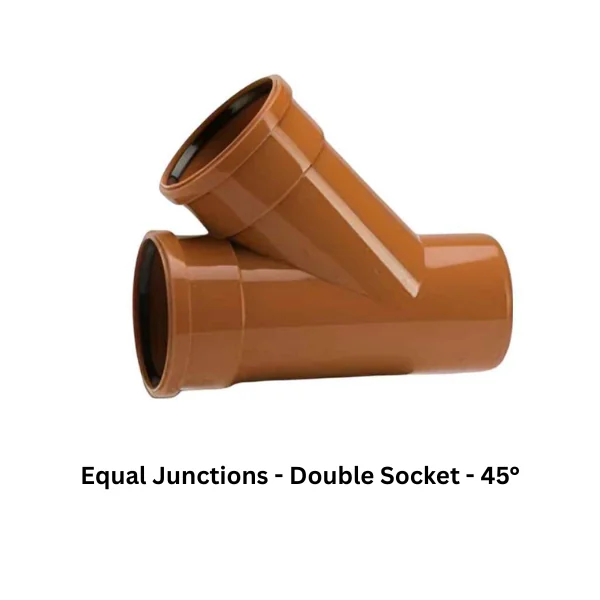
Equal Junction Underground Drainage Pipe
Equal Junction Underground Drainage Pipe is a uPVC branch fitting used to connect underground foul and surface water lines at controlled angles.
Description
Equal Junction Underground Drainage Pipe creates a smooth branch connection within underground drainage layouts. Its uPVC body provides long-term resistance against soil chemicals, moisture, and ground pressure. The fitting maintains hydraulic flow efficiency and supports both foul and surface water systems designed to BS EN 1401-1 standards.
The junction introduces a controlled branch line at a shallow angle, reducing turbulence compared with sharp directional changes. It integrates with standard underground pipe networks and connects easily to inspection chambers, gullies, and system extensions. Below are the two available variants, each designed for different connection requirements.
Double Socket Equal Junction
Double Socket Equal Junction connects two plain-ended pipes using integrated push-fit sockets. It is available in 45° and 87.5° angles, giving installers flexibility for shallow flow diversions or near-vertical changes. This variant suits domestic drainage layouts, branch additions, and foul or surface water extensions where a clean directional change is required.
Triple Socket Equal Junction
Triple Socket Equal Junction provides three push-fit sockets for connecting multiple plain-ended lines. It also comes in 45° and 87.5° options to support complex system routing. This variation is suited to high-capacity drainage layouts, multi-line stormwater distribution, and commercial systems requiring three-way integration.
Installation Guide:
Prepare trench with granular bedding to support correct pipe level
Clean sockets and chamfer pipe ends before jointing
Push pipe fully into the socket to engage the seal
Align the branch angle (45° or 87.5°) with the planned drainage direction
Maintain correct fall for foul or surface water systems
Surround the fitting with granular material before final backfill
Always install junctions with branch outlets aligned to natural flow direction to avoid backflow risk
Should a 45° or 87.5° Equal Junction be used in an underground drainage system?
45° junctions create smooth, shallow directional changes and support efficient hydraulic flow in most foul and surface water layouts. They are preferred for long-run drainage where turbulence must stay low.
87.5° junctions are suitable for vertical or near-vertical connections and tight layout transitions, such as linking a downpipe into an underground run.
Both angles must follow drainage design requirements to maintain correct flow performance and Building Regulations compliance. 87.5° fittings are typically used where vertical drops enter horizontal drainage lines.
Can a 45° or 87.5° junction be installed upside down or reversed?
A 45° or 87.5° underground junction must not be installed upside down or reversed. These fittings are designed with a flow direction, socket orientation, and branch geometry that follow UK drainage standards for foul and surface water systems. Reversing the junction creates backfalls, stagnant water points, and non-compliant flow paths that increase blockage risk and reduce hydraulic performance.
A junction should always be installed with the branch sweeping in the direction of flow, with sockets positioned as intended by the manufacturer. The 87.5° pattern is specifically engineered for near-vertical drops, while the 45° pattern supports shallow directional changes; flipping either one compromises the self-cleansing ability of the pipework.
If a layout requires a different orientation, use the correct junction angle instead of rotating or inverting the fitting.
Which option is easier and faster to install for a single new branch?
The Double Socket version is simpler because it connects one branch only, reducing measuring and alignment time. Its two push-fit sockets allow direct installation without extra couplers, supporting quick domestic repairs and small layout changes.
Which junction is best for long-term system expansion or futureproofing?
The Triple Socket version provides an extra inlet, making it suitable for properties expecting future extensions, landscaping drainage, or additional stormwater feeds. Installers often choose it when designing underground systems that may require new connections later.
Related Products
Browse all products to find more items in this category.