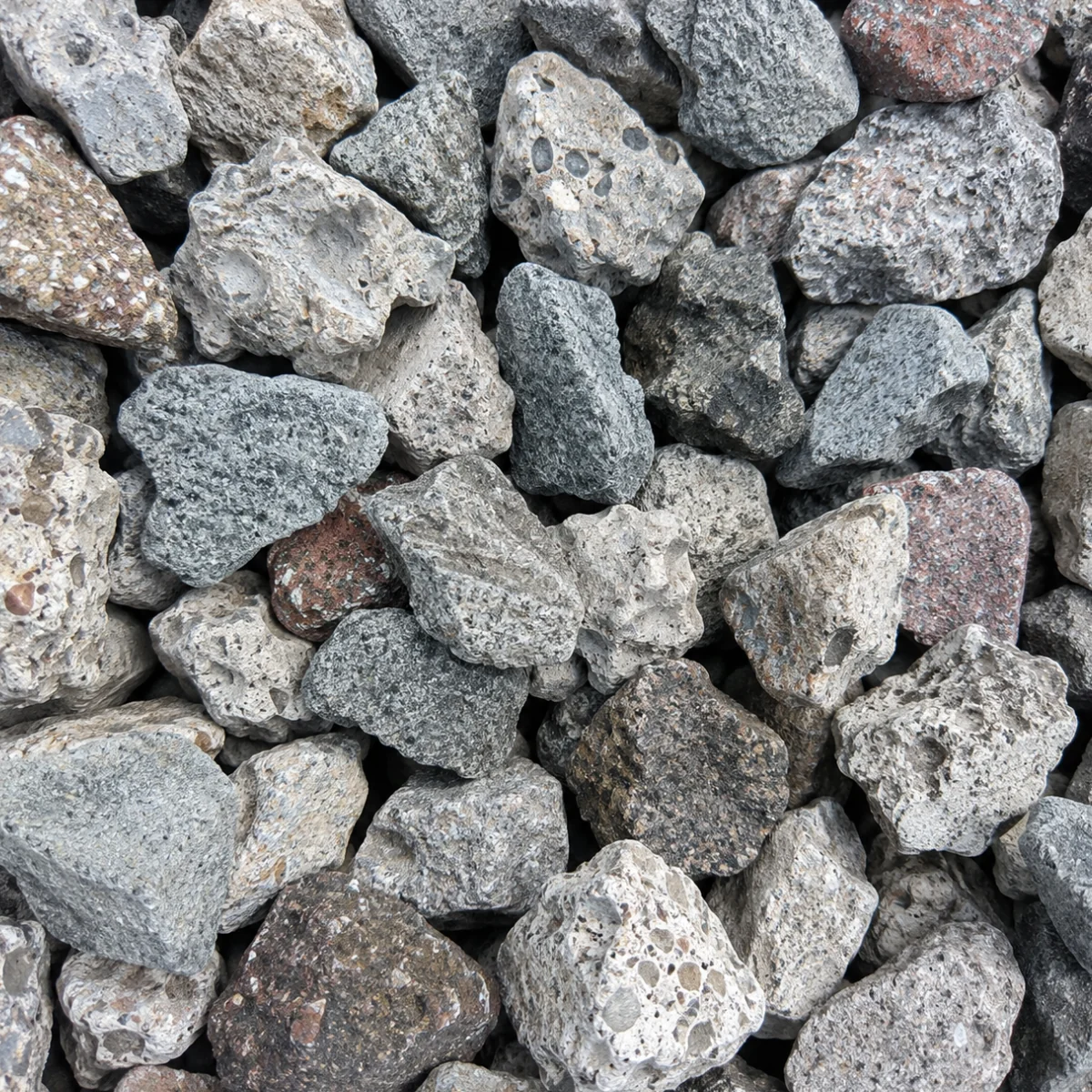
Crushed Concrete 40-75mm
Crushed Concrete is a recycled aggregate produced from processed concrete waste, graded to various sizes for use in sub bases, access roads, hardstandings, and general groundworks.
Description
Crushed Concrete is a recycled aggregate manufactured from demolished concrete structures such as buildings, pavements, and road slabs. The material is processed by crushing and screening to produce a usable aggregate with defined grading ranges.
The material consists mainly of crushed concrete particles with residual cementitious fines. Particle shape is angular. The aggregate compacts under load and can achieve a firm surface when properly confined. Drainage performance depends on grading and fines content.
Crushed Concrete is used across domestic, commercial, and civil engineering works. Typical uses include sub base construction, temporary access roads, hardstandings, and bulk fill where recycled aggregates are permitted.
What Is Crushed Concrete
Crushed Concrete is also known as recycled concrete aggregate. It is derived from concrete waste that has been crushed, screened, and processed to remove contaminants such as steel reinforcement.
Alternative Trade Names and Industry Terms
Crushed Concrete is commonly referred to as recycled concrete aggregate. It may also be described as concrete crush, crushed concrete hardcore, or recycled sub base depending on grading and use.
Common Grading Types of Crushed Concrete and Typical Application
Crushed concrete is supplied in a range of size gradings to suit different groundworks functions. Size selection affects compaction behaviour, drainage performance, and suitability for specific construction layers. Larger sizes are used for bulk fill and sub base construction, while finer grades are used for bedding and infill.
Size Range (mm) | Common Grade Reference | Typical Applications |
|---|---|---|
0–2 | Dust or fines | Pipe bedding, service trenches, cable laying, fine infill |
4–10 | Fine crushed concrete | Landscaping layers, pipe bedding, drainage surrounds |
10–20 | Crushed shingle size | Driveway bases, trench backfill, concrete products |
20–40 | Coarse aggregate | Soakaways, French drains, retaining wall backfill, site access |
40–75 | 6F2 recycled aggregate | Sub base layers, haul roads, hardstandings |
75–125 | 6F5 recycled aggregate | Heavy duty sub bases, piling mats, large scale fill |
Variable blend | Recycled Type 1 where certified | Pavement sub base, road construction, slab foundations |
Grading availability varies by recycling facility.
Compaction and Load Bearing Behaviour
Crushed Concrete compacts effectively due to angular particles and cementitious fines. Load bearing performance increases with compaction and confinement.
Angular particles provide mechanical interlock
Cement fines can stiffen when compacted
Suitable for moderate to heavy loading when specified
Performance depends on grading consistency
Drainage Characteristics of Crushed Concrete
Drainage performance varies with fines content. Coarser grades drain more freely. Finer grades retain water.
Coarse grades allow water movement
High fines content reduces permeability
Not a filter aggregate
Not suitable for designed drainage layers
Will Crushed Concrete Harden Over Time
Crushed Concrete may stiffen after compaction due to residual cement content. This does not create structural concrete. Hardening is variable and cannot be relied upon as a binding process.
Suitability and Usage Limitations
Suitable For:
Sub base layers
Temporary access roads
Hardstandings
Bulk fill
Yard construction
Ground level build up
Not Suitable For:
Structural concrete
Decorative finishes
Certified drainage systems
Unconfined exposed surfaces
High specification pavement layers without testing
Environmental and Sustainability Considerations
Crushed Concrete reduces landfill waste and demand for primary aggregates. It supports recycled material use where permitted by specification.
Material Consistency and Quality Control
Material quality depends on source concrete and processing controls. Colour, fines content, and grading can vary between batches.
Application Decision Table
Application | Suitable | Reason |
|---|---|---|
Sub base layer | Yes | Compacts and supports load |
Drainage trench | No | Fines restrict water flow |
Structural concrete | No | Not a cement bound product |
Temporary access road | Yes | Durable and compactable |
Decorative surface | No | Variable appearance |
Yard construction | Yes | Cost effective base material |
Crushed Concrete Versus Natural Gravel
Crushed Concrete provides angular interlock and compaction. Natural gravel is rounded and drains more freely. Crushed Concrete is recycled. Gravel is a natural primary aggregate.
Difference Between Crushed Concrete and Type 1 Sub Base
Crushed Concrete and Type 1 sub base differ mainly in compliance and grading control. Type 1 sub base follows a defined grading envelope and performance criteria. Crushed Concrete may meet Type 1 grading where certified, but general crushed concrete is supplied without guaranteed compliance unless stated.
Crushed Concrete Vs Crushed Gravel
Crushed gravel, also known as crusher run or crush and run, is a natural primary aggregate. It is produced by crushing quarried stone or natural gravel such as limestone, granite, or flint, resulting in clean mineral particles with no cementitious residue. Crushed concrete is a recycled aggregate produced from demolished concrete structures and contains angular particles with residual cement and mortar fines, which can affect grading consistency and compaction behaviour.
Aspect | Crushed Gravel | Crushed Concrete |
|---|---|---|
Material type | Natural primary aggregate | Recycled aggregate |
Source | Quarried stone or gravel | Demolished concrete |
Cement content | None | Residual cement fines |
Appearance | Consistent | Variable |
Binding tendency | No | May stiffen when compacted |
Specification control | High | Variable unless certified |
Environmental status | Primary material | Recycled material |
Are crushed gravel and crushed concrete the same for driveways?
No. They perform differently even though both are used in driveway construction.
Crushed concrete for driveways | Crushed gravel for driveways |
|---|---|
Crushed gravel does not bind. It relies on compaction and interlock. |
Crushed concrete may feel harder once compacted, but it is not concrete. |
It is commonly supplied as:
| It is often supplied as:
|
Which is better for a driveway, Crushed Concrete or Gravel?
It depends on layer function, not preference.
Sub base layer:
Crushed concrete or crushed gravel both acceptable where specification allows.Finished surface:
Crushed gravel is preferred for appearance and consistency.High specification or adoptable works:
Certified Type 1 or primary crushed gravel is usually required.
TradeSupermarket – UK Supply and Hire Platform
TradeSupermarket is a UK-based platform supplying plant hire, aggregates, and building materials for a wide range of project types nationwide. Products and services are structured in line with recognised UK classifications and standard supply and hire practices.
What Sets TradeSupermarket Apart
Unified Platform Structure: Hire services, aggregates, and building materials are supplied through a single operational framework rather than separate merchant systems.
Classification-Led Organisation: Products are presented using recognised UK grading, classification, and typical use categories to support correct selection.
Defined Supply Scope: The platform focuses on material supply and equipment hire only, with design, specification, and installation remaining outside the scope of service.
Use-Case Neutral Positioning: Products support domestic, commercial, and infrastructure projects without retail-led assumptions.
Consistent Operational Standards: The same structural and procedural standards are applied across all product categories.
Supply and Delivery Responsibility
Material Variation: Recycled aggregates vary in colour, grading, and composition depending on source material.
Quantity and Coverage: Materials are supplied by weight or volume as ordered. Performance depends on compaction and ground conditions.
Delivery and Site Access: Delivery requires suitable access for the selected vehicle type. Clear access, adequate space, and stable ground conditions must be available.
Offloading Conditions: Materials are offloaded at ground level only. Placement and installation are not included.
Returns and Surplus Material: Bulk aggregates are non returnable once delivered.
Supply Scope: Supply is limited to material provision only. Product selection and suitability remain the responsibility of the buyer or contractor.
Related Products
Browse all products to find more items in this category.